When to Keep or Cut: How Vehicle Depreciation Shifts at Key Mileage Milestones
Rethinking the Urge to Drive Your Vehicle Into the Ground
The traditional advice to keep a vehicle forever sounds financially sensible: once the loan is paid, every additional year should reduce transportation costs. That logic is useful, but incomplete. A debt-free vehicle can still become expensive when deferred maintenance arrives in clusters, especially around mileage points where belts, pumps, suspension parts, tires, brakes, and transmission service may be due at the same time. The right question is not simply whether the car has a payment. It is whether the next year of ownership will cost less than the realistic alternatives.
There is also a psychological trap in older-car ownership. A paid-off vehicle feels free because the monthly loan has disappeared, while repairs are treated as isolated annoyances. In reality, a car still consumes money through insurance, fuel, registration, maintenance, repairs, lost time, and the value it continues to lose. Reviewing those costs at defined mileage thresholds turns an emotional decision into financial math. Instead of waiting for a major failure to force a rushed purchase, you can identify the point at which selling, trading, or continuing to drive is most defensible.
Understanding the True Anatomy of Modern Depreciation Curves
Most vehicles lose the largest share of their value during the first three years. The first owner absorbs the initial new-car premium, the effect of a prior owner appearing on the title, and the market”s adjustment from “new” to “used.” The exact curve varies by brand, body style, powertrain, supply, incentives, accident history, and regional demand, but the pattern is consistent enough to guide planning: early depreciation is usually steep, then the annual decline becomes less dramatic.
Mileage accelerates that decline because buyers use the odometer as a rough forecast of future wear. The condition of the engine and transmission matters, but so do less visible systems such as wheel bearings, air-conditioning components, suspension parts, cooling systems, and electronic modules. Used-car valuation guidance from Carwow”s mileage analysis notes that mileage is only one factor, alongside service history, condition, damage, modifications, model, and market demand. A well-maintained high-mileage vehicle can outperform a neglected lower-mileage example, but the odometer still influences buyer confidence.
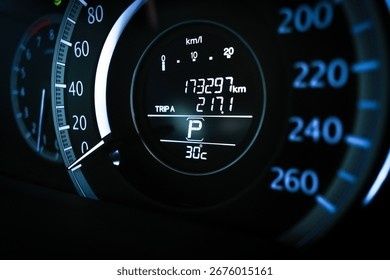
After the early depreciation period, the curve generally flattens. That is good news for an owner who has already passed the first several years, but it creates a financial tension: resale value may fall slowly while mechanical risk rises. A vehicle could lose only a modest amount of market value over the next year, yet require a repair that exceeds that depreciation by several times. Tracking cost per mile helps expose this shift. Add fuel, insurance, maintenance, repairs, registration, interest, and estimated depreciation, then divide by annual miles. For a broad baseline on ownership and operating expenses, consult the Bureau of Transportation Statistics cost data. Your vehicle may differ, but a benchmark prevents a paid-off car from being mistaken for a cost-free car.
The 30,000 and 60,000-Mile Checkpoints That Define Peak Resale
Thirty thousand miles is an important transition point, although it is not a universal warranty deadline. Many new vehicles have bumper-to-bumper coverage that expires by time or mileage, commonly around three years or 36,000 miles, while some manufacturers use different limits. Check the warranty booklet rather than assuming every vehicle follows the same schedule. As coverage approaches its end, a thorough inspection can identify problems while certain repairs may still qualify for warranty attention.
The 60,000-mile mark often represents a strong selling window because the vehicle can still present as a relatively modern, usable car while its market value remains meaningful. It is also a point at which scheduled maintenance may become more substantial. A trade-in before this work is due may preserve equity, but selling solely to avoid maintenance is not automatically profitable. Compare the service cost with the value lost by replacing the vehicle, including sales tax, registration, financing charges, and insurance changes.
Review the manufacturer”s maintenance schedule and obtain written estimates for work that is actually due. Depending on the model, a 60,000-mile visit may include several of the following:
- Transmission fluid replacement or inspection, where the manufacturer specifies it.
- Brake pad, rotor, and brake-fluid evaluation.
- Tire replacement if tread depth, age, cracking, or uneven wear indicates a safety concern.
- Engine and cabin air filters, spark plugs, belts, coolant, and differential or transfer-case fluids where applicable.
- Inspection of shocks, struts, control-arm bushings, wheel bearings, hoses, and the battery.
These items do not all fail at exactly 60,000 miles, and some vehicles require less service while others require more. The practical lesson is to forecast the next 12 to 24 months rather than reacting to a single invoice. If the vehicle is approaching 60,000 miles with a clean history, no warning lights, and moderate upcoming costs, keeping it may be sensible. If several large services are due at once and the vehicle has declining reliability, the pre-service resale window deserves serious attention.
Breaking the Six-Figure Threshold at 100,000 and 150,000 Miles
Crossing 100,000 miles can produce a psychological drop in buyer demand even when the vehicle remains mechanically sound. Some shoppers search below six figures, lenders may apply stricter assumptions to older vehicles, and buyers often expect larger repairs after the odometer passes that threshold. This does not mean a 100,000-mile car has reached the end of its useful life. Modern vehicles can travel much farther with proper care, but the market often prices in uncertainty before a mechanical problem occurs.
The 100,000-mile service can be particularly expensive when several age and mileage items converge. A timing belt, where fitted, may require replacement along with a water pump and tensioners. Struts can lose damping performance, cooling-system components can age, and motor mounts, hoses, seals, spark plugs, and suspension bushings may need attention. Costs vary widely by vehicle and location, so the figures below are planning ranges rather than promises.
| Potential 100,000-mile item | Why it matters | Typical planning consideration |
|---|---|---|
| Timing belt and water pump | A belt failure can cause severe engine damage on some engines | Confirm the manufacturer interval and obtain a bundled estimate |
| Struts and suspension components | Worn parts affect ride control, tire wear, and braking stability | Inspect for leaks, bouncing, uneven wear, and clunks |
| Cooling system service | Old hoses, thermostats, radiators, or pumps can cause overheating | Preventive replacement may cost less than an overheated engine |
| Plugs, belts, mounts, and fluids | Wear can reduce efficiency and create vibration or drivability problems | Use the service schedule and condition reports, not guesswork |
Beyond 150,000 miles, residual value often stabilizes near the lower end of the market, while the probability of unscheduled repairs tends to increase. The vehicle may still be an excellent commuter if its structure is sound, maintenance is documented, and the owner can tolerate occasional downtime. The calculation changes when a transmission, hybrid battery, turbocharger, air-conditioning system, or major electrical module becomes suspect. At that stage, the vehicle”s remaining market value may cover only a small portion of the repair.
A high-mileage vehicle should therefore be judged by reliability and total cost, not the odometer alone. Regular oil changes, prompt attention to warning signs, and a strong service record can support long life. However, postponing known repairs merely to cross another mileage milestone is risky, especially when the issue affects steering, braking, cooling, or engine lubrication. Safety-related work should be completed regardless of resale strategy.
A Practical Repair Versus Replace Formula for Everyday Drivers
A useful starting point is the 50 percent rule: if projected repairs for the coming year approach half of the vehicle”s current market value, compare replacement options carefully. This is not a law of economics. A reliable 12-year-old car may still beat a newer vehicle with a large payment, while an unreliable luxury model may justify replacement at a much lower repair-to-value ratio. The rule simply identifies when a deeper review is necessary.
Use the vehicle”s actual private-party and trade-in values, not the original purchase price. Then estimate the next 12 months of scheduled service, deferred work, tires, brakes, insurance, registration, fuel, and likely downtime. Include the cost of a replacement vehicle”s taxes, title fees, dealer fees, financing, insurance, and expected depreciation. For commuters, also place a value on reliability. Missing work, arranging a rental car, or losing several hours at a repair shop can make a low-dollar repair more expensive than its invoice suggests.
Business use can change the comparison. Self-employed drivers may be able to deduct the business-use portion of eligible vehicle expenses through the standard mileage method or actual expense method, subject to IRS rules and recordkeeping requirements. Most employees cannot deduct unreimbursed car expenses, and mixed personal and business use must be allocated correctly. Review IRS Topic no. 510 on business use of a car before treating a deduction as guaranteed. Tax treatment, mileage records, depreciation limits, and the vehicle”s business-use percentage can materially alter the real cost of keeping or replacing a car.
- List the next 12 to 24 months of known work. Use the owner”s manual, service invoices, inspection results, tire age, and mechanic estimates.
- Separate maintenance from warning signs. Routine service is predictable; overheating, slipping transmission, severe oil consumption, structural rust, or repeated electrical failures signal greater risk.
- Calculate the replacement baseline. Include the full monthly payment, taxes, insurance, fuel, financing interest, and expected depreciation, not just the advertised price.
- Check your operating pattern. A short local commute may make a paid-off car attractive, while a long daily commute may justify paying more for predictable warranty coverage.
- Make a deadline before failure occurs. If selling is likely, list or trade while the vehicle is running well and before a major repair becomes visible to buyers.
Finally, distinguish reliability anxiety from evidence. A clean inspection, complete records, and stable operating costs support continued ownership. Repeated breakdowns, multiple warning lights, missed maintenance, or a repair estimate that approaches the vehicle”s value support replacement. The strongest decision is usually the one based on documented future costs rather than fear of an unknown problem.
Take Control of Your Automotive Equity Before Repairs Decide for You
Mileage milestones are not automatic sell signals, but they provide useful decision gates. Around 30,000 miles, review warranty coverage and service history. Near 60,000 miles, compare the value of the vehicle with the cost of scheduled maintenance and likely wear items. At 100,000 miles, investigate timing-system, cooling, suspension, and drivetrain work before the odometer changes buyer perception. After 150,000 miles, focus less on resale value and more on safety, downtime, repair probability, and the vehicle”s ability to meet daily needs.
The most effective action is a written ownership audit today. Pull the service records, identify the next major mileage interval, request a credible inspection, and obtain the vehicle”s current market value. Then compare the projected cost of keeping it with the complete cost of replacement. Selling before a known repair may protect equity, while keeping a well-maintained vehicle may remain the financially stronger choice. The key is to make that decision while you still have options, not after a breakdown has made it for you.