Navigating Sudden Hydroplaning: Physics, Reaction Times, and Recovery Techniques
The Split Second When Tires Float
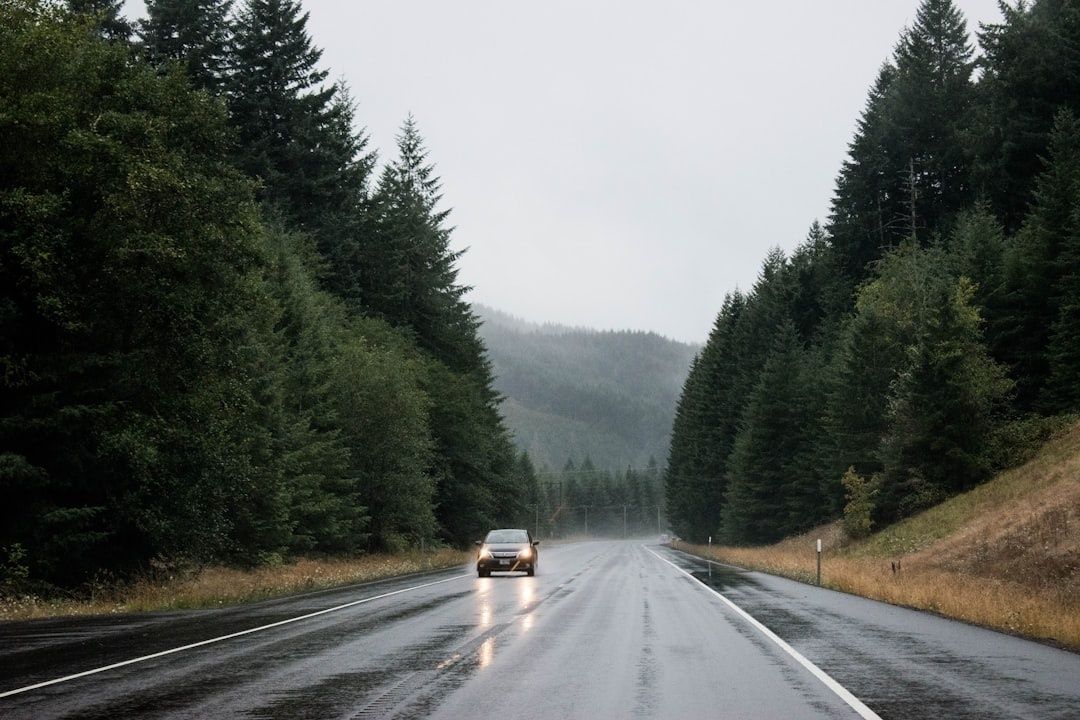
Hydroplaning can begin with almost no warning. The steering suddenly feels light, the vehicle may drift toward another lane, and the engine speed can rise because the driven tires are spinning with less resistance. For a moment, the tires are no longer pressing firmly against asphalt. They are riding on a thin wedge of water, with steering and braking ability greatly reduced. A useful review of hydroplaning safety guidance reinforces the central point: the driver must create time and allow the tires to regain pavement contact.
The natural reaction is often the most dangerous one. Slamming on the brakes, yanking the steering wheel, or rapidly adding and removing throttle can turn a brief loss of grip into a spin. The tire tread is designed to move water through its grooves, but excessive speed, deep standing water, or worn tread can overwhelm those channels. This guide explains the physics behind that failure and provides a calm recovery sequence built around smooth inputs, straight tracking, and delayed braking.
Understanding Water Wedge Mechanics and Speed Dynamics
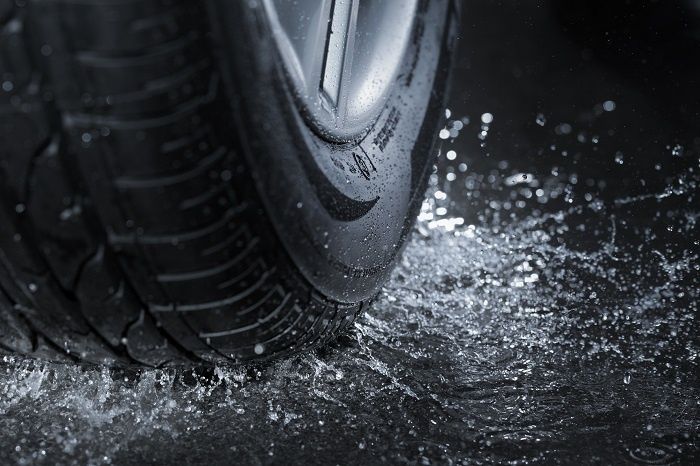
A tire does not simply sit on top of a wet road in the same way it does on dry pavement. As it moves forward, the tread must push water away from the contact patch. Grooves and sipes provide escape routes, allowing rubber to meet the road. When the vehicle travels slowly enough and the water is shallow enough, the tread can usually clear the film. As speed rises, however, the tire reaches the water faster than its channels can evacuate it. Pressure builds at the leading edge of the contact patch, creating a hydrodynamic wedge that lifts part or all of the tire away from the asphalt.
There is no single speed at which every vehicle hydroplanes. Depending on water depth, tire design, inflation, tread condition, and road texture, the process can begin at speeds as low as about 35 mph. Standing water raises the risk because more water must be displaced. A shallow sheen after a light shower may be manageable at a cautious speed, while a rut filled by a heavy downpour can overwhelm even a relatively new tire. Vehicle weight helps when tire size and type are otherwise identical, but extra mass is not a substitute for good tires or reduced speed. A heavy SUV can still hydroplane when it enters deep water too quickly.
Tread depth has a measurable effect on wet braking and water displacement. Testing reported by MotorWeek’s Tire Rack report compared tires with approximately 11/32 to 12/32 inch of tread against tires worn to 4/32 and 2/32 inch on a road covered by 1 mm of water. The newer tires stopped in about 205 feet for a sedan and 216 feet for a pickup. At 4/32 inch, stopping distances increased to 270 feet and 261 feet. At the legal minimum of 2/32 inch, the sedan averaged 400 feet and the pickup 287 feet. Results vary by vehicle and tire, but the pattern is clear: legal minimum tread is not the same as strong wet-weather performance.
| Tread condition | Water-channel capacity | Reported sedan stopping distance | Practical meaning |
|---|---|---|---|
| 11/32 to 12/32 inch | Strongest ability to move water | 205 feet | Best of the tested conditions, though speed still matters |
| 4/32 inch | Reduced groove volume | 270 feet | Wet braking performance has deteriorated significantly |
| 2/32 inch | Minimal remaining tread | 400 feet | Legal minimum, but a poor margin for heavy rain and standing water |
Why Instinctual Reactions Backfire on Wet Roads
Panic braking creates two separate problems. If the wheels lock, the tires stop rolling and begin sliding like skis across the water-covered surface. A sliding tire cannot respond normally to steering input, so the vehicle may continue straight even while the wheel is turned. In vehicles equipped with functioning anti-lock brakes, pressing the brake firmly allows the system to pulse brake pressure and preserve steering capability. Even then, braking while the tires are still floating can reduce control, so the first priority during a clear hydroplaning event is to release the accelerator smoothly and let the vehicle slow naturally.
Overcorrecting is equally dangerous. A driver may steer sharply against a drift, then steer sharply back when the vehicle begins to respond. When the tires suddenly reconnect with the pavement, that stored steering angle can produce snap-oversteer, causing the rear of the vehicle to swing outward. Cruise control can compound the problem by maintaining engine power while the driven tires spin across water. Official guidance from the California DMV safe-driving handbook emphasizes reducing speed, increasing space, scanning ahead, and adapting to slippery conditions.
- Startle response: The hands jerk toward the perceived danger before the driver has identified the vehicle’s actual direction of travel.
- Brake fixation: The driver treats the loss of grip like an emergency stop, even though locked or floating tires cannot provide normal control.
- Visual overreaction: Looking directly at a guardrail, curb, or nearby vehicle can draw steering toward that hazard.
- False confidence: A vehicle may feel stable in light rain, then lose grip suddenly in a rut or pooled section of roadway.
- Power maintenance: Cruise control or an abrupt throttle input can keep torque reaching tires that are already spinning.
The Calm Blueprint for In-Flight Recovery
Recovery begins with recognizing what is happening. The steering may feel unusually loose, the vehicle may drift without the normal tire-road resistance, and the engine may rev more freely. Do not attempt to test the grip by making a sharp steering movement. Keep the eyes directed toward the open path, not toward the object the vehicle might approach. The goal is to reduce the forces acting on the tires until their grooves can clear water and the rubber can reconnect with the road.
- Ease smoothly off the accelerator. Lift your foot gradually rather than snapping completely off the pedal. Removing driving power allows rolling resistance and aerodynamic drag to reduce speed without adding a sudden weight transfer. Do not shift abruptly into park or reverse, and avoid using the parking brake.
- Maintain steady, straight tracking. Hold the steering wheel as close to straight as the road allows. If the vehicle is drifting, make only a small correction toward the intended open path. A gentle steering input is safer than a rapid turn, especially when the front tires may regain grip before the rear tires.
- Keep both hands firm at 9 and 3 o’clock. This position provides useful leverage while keeping the hands away from the upper and lower steering-wheel areas where sudden rotation can cause injury. Expect lateral tugs from puddles, road grooves, and uneven water depth, and resist the urge to fight each movement with a large correction.
- Wait for contact to return before braking lightly. Reestablished grip often feels like a subtle thump, a change in steering weight, or the return of normal road feedback. Once the vehicle is tracking predictably, apply the brakes progressively if necessary. Continue slowing until speed matches the conditions, and avoid stopping in a travel lane unless remaining there is more dangerous.
If the vehicle begins to rotate rather than simply float, the response becomes more dependent on which end is sliding and the vehicle’s drive layout. Keep inputs smooth and steer gently in the direction the vehicle is sliding only as needed to align it with the intended path, then reduce steering as the tires recover. Electronic stability control and traction control can help, but they cannot overcome excessive speed or deep water. If visibility collapses, flooding covers the roadway, or the car cannot be controlled, move to a safe location when possible and stop driving until conditions improve.
Preemptive Road Strategies and Tire Maintenance
The most effective hydroplaning technique is avoiding the conditions that make recovery necessary. Scan the road at least 10 to 15 seconds ahead, looking for dark pavement, glossy sheen, tire ruts filled with water, pooling near shoulders, and spray from trucks. Rain can conceal potholes and lane markings, so increase following distance and reduce speed before reaching a puddle. Existing tire tracks from vehicles ahead may have less standing water, but they are not automatically safe. Water can refill quickly, and following too closely reduces the time available to see a newly formed hazard.
Maintenance determines how much margin the tires have. Check pressure when the tires are cold and use the vehicle manufacturer’s recommended pressure, not the maximum number molded into the sidewall. Underinflation can alter the contact patch and reduce handling stability, while overinflation can reduce the tire’s ability to conform to the road. Inspect tread for uneven wear, cracks, bulges, and objects, and replace tires before they reach the minimum when regular heavy rain is part of the driving environment.
- Reduce speed before entering areas where water may collect, especially bridge joints, wheel ruts, curves, and low points.
- Turn off cruise control during rain or whenever standing water is possible.
- Use low-beam headlights, keep the windshield clean, and replace worn wiper blades.
- Maintain at least a five-second following distance in heavy rain, increasing it further behind trucks that create spray.
- Check tread depth across the tire rather than measuring only one convenient spot, since uneven wear can leave a weak section.
- Rotate and balance tires according to the vehicle manufacturer’s schedule, and have alignment checked when wear is irregular.
- Never drive through water when its depth, current, or road surface cannot be judged safely.
Mastering Calm Control for Every Storm
Hydroplaning is a traction problem, not a contest of reflexes. The decisive mindset shift is from trying to force the vehicle back onto the road to giving the tires the conditions they need to recover. Release the accelerator smoothly, keep the wheel steady, avoid abrupt braking, and wait for normal steering feel to return. Straight tracking preserves the best chance of a controlled recovery because it limits the sudden forces created when grip returns.
Preparation makes that calm response much easier. Lower speed, greater following distance, attentive scanning, and a tire inspection before the trip reduce both the likelihood and the consequences of hydroplaning. Good tread, correct inflation, clear visibility, and a driver who is willing to postpone a trip during dangerous flooding provide more protection than any single electronic feature. When rain arrives, stay relaxed, deliberate, and prepared. The safest correction is usually the smoothest one.