
How Extreme Summer Heat Stresses Your Car’s Vital Systems (And How to Protect Them)
The Hidden Thermodynamic Toll of Triple-Digit Highways
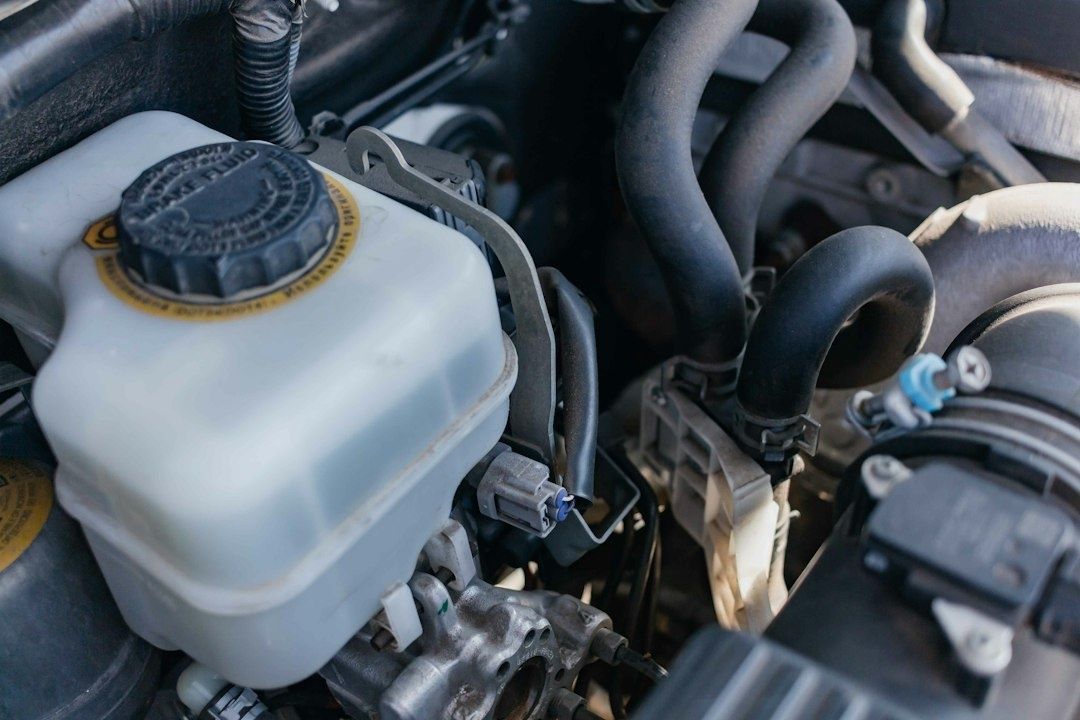
A summer highway can impose a much heavier thermal load on a vehicle than the dashboard temperature suggests. When the outside air remains above 90°F, the engine compartment can climb beyond 200°F, especially after stop-and-go traffic, long grades, or a hot soak following shutdown. Radiators, exhaust components, turbochargers, batteries, belts, and fluid reservoirs all operate in an environment where heat has less opportunity to escape.
The danger is that some of the most expensive damage develops without an obvious warning. A temperature gauge may remain normal while battery electrolyte slowly evaporates, engine oil loses part of its protective viscosity, or a tire”s internal materials weaken from repeated flexing. Visible overheating, steam, a warning light, or a complete loss of power are late-stage symptoms, not the first signs of thermal stress.
The primary vulnerability zones are the battery, the lubrication system, and the tires. Each responds differently to heat, but all can turn a routine commute or road trip into a roadside emergency when maintenance has been postponed. A short pre-trip inspection can identify weak charging performance, degraded oil, low tire pressure, damaged sidewalls, and other problems before highway speed and sustained heat magnify them.
Why Summer Heat Destroys Batteries Faster Than Winter Cold
Cold weather makes a battery”s weakness obvious because low temperatures slow the chemical reactions needed to produce starting current. Extreme heat is often more destructive over time. In simplified terms, the Arrhenius relationship shows that chemical reaction rates increase as temperature rises. Inside a lead-acid battery, that means unwanted reactions accelerate along with the reactions that provide electrical power.
High under-hood temperatures encourage electrolyte evaporation and corrosion of the battery”s internal lead grids. As water leaves a conventional flooded battery, the electrolyte becomes more concentrated, which can increase corrosion and reduce the battery”s ability to accept and deliver a charge. Grid corrosion may weaken the internal structure until a connection fails suddenly. The result can be a battery that starts normally one morning and produces only a click after a hot day.
This is different from a typical cold-weather complaint, where the engine cranks slowly and the battery may recover somewhat when temperatures rise. Heat-related failure is frequently structural and chemical. According to Consumer Reports, AAA receives nearly 2 million battery-related service calls each summer, a reminder that heat failures are not limited to old or neglected vehicles. Battery life also varies by design and climate, so the label, size, and original equipment requirements matter more than brand familiarity alone.
Before a long trip, follow NHTSA summer driving guidance, which emphasizes checking the battery and other key systems before traveling in extreme weather. A battery that is more than three years old in a very hot climate deserves a professional load test, even if it still starts the vehicle reliably.
- Look for swollen or distorted battery cases, which can indicate excessive heat or internal damage.
- Inspect terminals for white, blue, or green corrosion and check that the connections are secure.
- Do not run accessories for extended periods with the engine off, particularly in hot weather.
- Use the correct replacement battery type, especially when the vehicle requires an AGM battery or battery registration.
Pre-Trip Electrical Diagnostics for the Everyday Driver
A basic digital multimeter cannot replace a professional load test, but it can reveal a weak battery or charging problem before departure. Perform the test with the vehicle parked safely, the engine off, and the battery allowed to rest. Avoid touching the meter probes together while they are connected to the battery, and stop if the battery is cracked, leaking, or visibly swollen.
- Set the multimeter to DC voltage. Touch the red probe to the positive terminal and the black probe to the negative terminal. A fully charged, rested battery commonly reads close to 12.6 volts, while a reading near 12.2 volts suggests partial discharge. A substantially lower reading warrants charging and testing before travel.
- Start the engine and repeat the measurement at the battery terminals. Many vehicles should show charging voltage in roughly the mid-13s to mid-14s, although smart charging systems can vary their output. A consistently low reading may indicate an alternator, belt, wiring, or battery problem.
- Inspect the case, hold-down, terminal posts, and surrounding plastic. Look for hairline cracks, melted sections, loose clamps, and signs that heat has distorted the casing. A battery must be held firmly because vibration can worsen internal damage.
- Check for excessive charging voltage or a battery that becomes unusually hot. Overcharging can accelerate electrolyte loss and damage the battery. Have a qualified technician test the alternator and charging controls if voltage is inconsistent or unusually high.
- Review the battery”s installation date. At the three-year mark, especially in a hot region, arrange a conductance or load test rather than waiting for a no-start event. Vehicles with AGM batteries may require the correct replacement technology and electronic registration.
Thermal Shear and Lubricant Breakdown Inside Hot Engines
Engine oil protects moving parts by maintaining a separating film between surfaces. Heat reduces oil viscosity, while prolonged operation can consume additives and oxidize the base oil. Multigrade oils rely partly on viscosity index improvers to behave acceptably across a broad temperature range. Under sustained heat and mechanical stress, those polymer molecules can shear, leaving the oil thinner than intended at operating temperature.
A thinner oil film may still look adequate on a dipstick, but it can provide less margin between bearings, camshaft surfaces, turbocharger components, and cylinder-wall areas. High-load driving, towing, long climbs, and extended idling increase the risk. Turbocharged engines add another challenge because turbocharger bearings and nearby oil passages experience severe heat. Oxidation can create varnish and deposits, while depleted detergents and dispersants allow sludge or residue to accumulate.
Oil selection must follow the vehicle manufacturer”s specification, not a general assumption that thicker oil is always safer in summer. Specialty oils marketed for racing or outdoor equipment may have excellent heat and shear properties, but they are not automatically suitable for passenger vehicles. For example, a competition nitro-engine oil is designed for a very different application. Use the owner”s manual specification, viscosity range, approval standard, and service interval as the controlling information.
| Inspection | What it can indicate | Recommended response |
|---|---|---|
| Oil level below the safe range | Consumption, leakage, or fluid migration | Top up with the specified oil and investigate the cause |
| Strong burnt odor | Oxidation, overheating, or oil contacting hot surfaces | Arrange prompt inspection, especially if accompanied by smoke |
| Very dark, gritty, or sludged oil | Contamination, extended service, or deposit formation | Follow the service schedule and ask for a professional evaluation |
| Milky appearance | Possible coolant contamination or condensation | Do not dismiss it; seek immediate diagnostic help |
Check oil on level ground with the engine off for the period specified in the owner”s manual. Pull the dipstick, wipe it clean, reinsert it fully, and read the level. A small amount placed on a clean white paper towel can reveal grit, fuel-like thinness, or unusual discoloration, although color alone does not determine oil condition. Look beneath the vehicle and around the engine for fresh leaks, because low oil and hot exhaust components create both lubrication and fire risks.
Tire Chemistry Under Pressure on Scorching Asphalt
Road pavement can become 40°F to 60°F hotter than the surrounding air, depending on sunlight, pavement color, wind, and local conditions. A tire therefore operates between hot asphalt below and heated air inside. The air pressure rises as the tire warms, but pressure increase itself is not the main danger. The larger concern is the heat generated when a tire flexes repeatedly, particularly when it is underinflated.
Every rotation causes the sidewall and tread to deform. At highway speed, that repeated flexing creates heat within the rubber and reinforcing materials. This can produce internal standing waves, where sections of the tire deform and recover rapidly rather than rolling smoothly. Excessive heat can weaken the bonding between rubber, belts, and plies, increasing the risk of separation or a blowout. Heavy loads, old tires, pothole damage, and long periods of high-speed travel add to the stress.
Underinflation is especially dangerous because it increases sidewall flex and heat generation. A tire that is underinflated before departure may become critically hot long before the driver notices a handling change. Never reduce pressure based on a hot-weather fear of overpressure, and never use the maximum pressure molded into the sidewall as the normal target unless the vehicle manufacturer specifies it. Use the cold-pressure figure on the driver”s doorjamb label or in the owner”s manual.
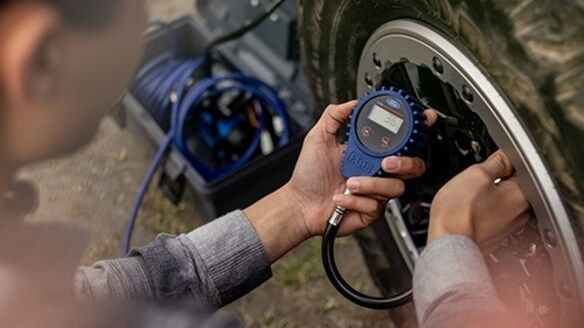
- Check all four tires and the spare when they are cold, ideally before the vehicle has been driven.
- Inspect tread, sidewalls, valve stems, and bead areas for cuts, bulges, cracking, exposed cords, or embedded objects.
- Confirm that tire size, load rating, speed rating, and maximum vehicle weight suit the car and the planned load.
- Restore pressure after carrying heavy cargo or towing, using the manufacturer”s guidance rather than guesswork.
- Follow established tire maintenance standards for inspections, pressure checks, rotation, and damage control.
Pressure should be checked with a reliable gauge, not judged by appearance. A tire can look normal while being significantly underinflated. If a tire-pressure monitoring warning appears, reduce speed, avoid abrupt maneuvers, and inspect the tires as soon as safely possible. If a blowout occurs, hold the steering wheel firmly, release the accelerator gradually, avoid hard braking, and guide the vehicle to a safe location away from traffic.
Build Your Summer Heat Defense Strategy Before You Roll Out
A practical departure routine does not require a garage full of tools. In about 15 minutes, a driver can identify several conditions that commonly turn heat into a breakdown. Perform the checks while the vehicle is cool, on level ground, and before loading luggage or passengers.
- Inspect tire pressure, tread, sidewalls, spare tire, and visible signs of damage.
- Check the battery case and terminals, then measure resting voltage if a multimeter is available.
- Start the engine and watch for charging abnormalities, warning lights, unusual belt noise, or a slow crank.
- Check engine oil level and inspect for leaks, burnt odors, or contamination.
- Confirm coolant level in the proper reservoir only when the engine is cool, and never open a hot radiator cap.
- Remove unnecessary cargo, verify that the vehicle is not overloaded, and carry water, a charged phone, and basic roadside supplies.
The useful mental shift is from reactive roadside rescue to proactive thermodynamic management. Heat does not need to cause visible overheating before it damages a battery, thins an oil film, or pushes a tire beyond its safe thermal margin. A few deliberate checks, followed by professional testing when readings or warning signs are abnormal, can prevent a minor maintenance issue from becoming a high-speed emergency.
With the battery charged, the correct oil at the proper level, and every tire inspected and inflated to specification, highway travel becomes more predictable. Continue to monitor warning lights, changes in handling, unusual odors, and new noises during the trip. Calm awareness and timely action are the most reliable equipment for crossing a hot summer road safely.